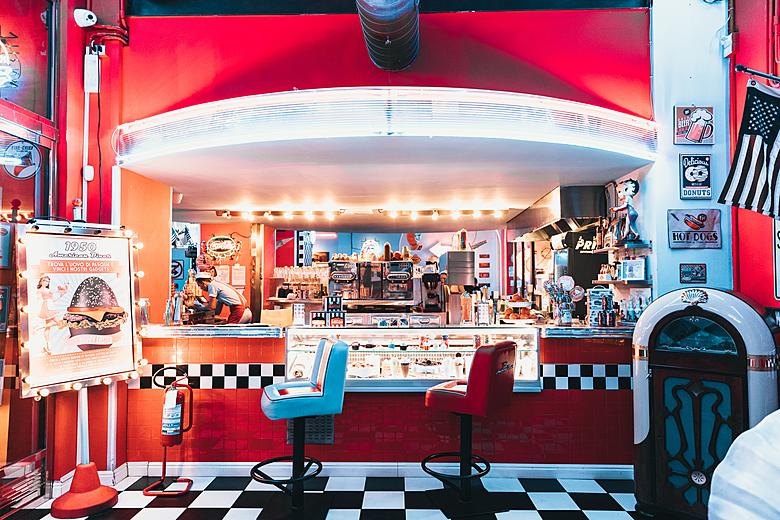
The Walk-In Number
728 walk-ins. That’s the number most restaurant campaigns can’t produce — because most campaigns don’t track walk-ins at all.
Walk-ins are the hardest conversion to attribute and the easiest to ignore. They’re also the majority of a neighborhood diner’s business.
the three-conversion rule for restaurants: walk-ins via Google’s verified store visit data, phone calls from ads, and online orders — all tracked simultaneously. Without all three, you’re seeing a fraction of the actual return.
This diner’s 963 total conversions: 728 walk-ins (75.6%), 103 phone calls, 132 online orders. A campaign tracking only online orders would have shown 132 conversions and an underwhelming return. The full number is 963 and 44.2x.
Google Maps as a Seat-Filler
A neighborhood diner’s customer is within three miles. On their phone. Searching breakfast near me or diner near me open now.
When the diner’s ad appears at the top of that search, Google Maps becomes a pipeline from search to seat.
how Google Maps advertising drives restaurant foot traffic explains how verified store visit conversions are measured.
100% top-of-page impression share on Restaurant Open Now, Affordable Breakfast Near Me, Affordable Dining Near Me. When someone within the catchment area searched, this diner was first. 728 of them walked in.
The Campaign Architecture
Tight 3-5 mile radius — the realistic catchment area. Every impression outside it is wasted.
Bid multipliers heavier during breakfast and lunch rush, lighter off-peak. The $654 budget worked hardest when the diner was most likely to fill a seat.
Buyer intent only: breakfast near me, diner near me open now, affordable breakfast near me. No recipe searches. No food content. Every click from someone who is hungry right now.
$654 over five weeks is $130 per week. Less than a single printed menu update. The return was 44.2x and 728 new faces through the door.